
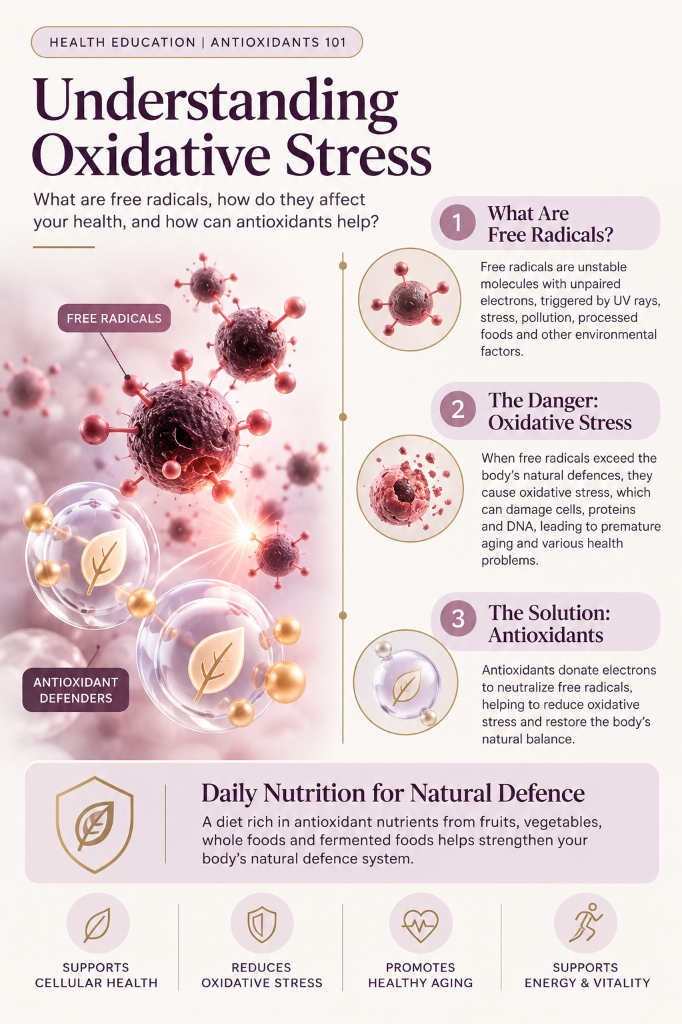
Every second, your cells perform trillions of chemical reactions to produce energy. During this normal metabolic process, unstable molecules with unpaired electrons—known as free radicals—are generated.
What Is Oxidative Stress?
Because free radicals possess an unpaired electron, they scavenge surrounding molecules (like lipids in cell membranes, proteins, and even cellular DNA) to stabilize themselves. When free radical production exceeds your body’s innate antioxidant defenses, a condition called oxidative stress occurs.
How Antioxidants Protect Your Body
Antioxidants are the cellular heroes that safely donate an electron to neutralize free radicals without becoming reactive themselves. Key antioxidant powerhouses include:
- Vitamin C (Ascorbic Acid): Found in citrus, amla, bell peppers, and kiwi.
- Vitamin E (Tocopherols): Abundant in sunflower seeds, almonds, and cold-pressed oils.
- Polyphenols & Flavonoids: Packed inside berries, green tea, turmeric, and dark leafy greens.
- Glutathione: The body’s master antioxidant, supported by sulfur-rich foods like garlic, onions, and cruciferous vegetables.
By consuming a vibrant rainbow of whole plant foods every day, you furnish your body with the antioxidant armor it needs for lifelong vitality.