
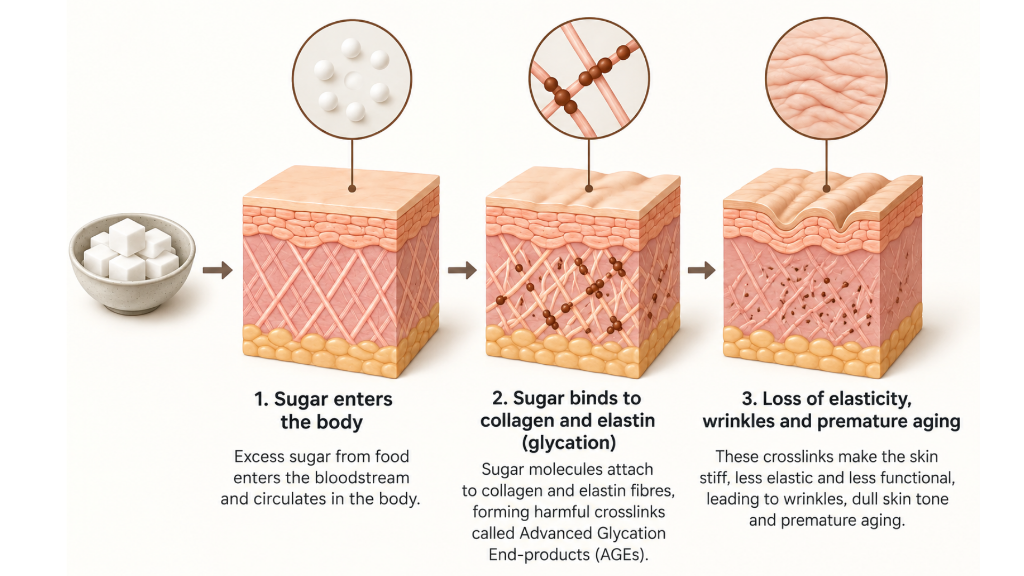
How sugar affects your body—and why daily habits matter
Your body needs sugar for energy. But when sugar attaches to proteins in your body, it starts a process called glycation.
Over time, this process can form compounds called Advanced Glycation End-products, or AGEs.
Why does it matter?
Think of collagen and elastin as the support system that keeps your skin firm and flexible. Glycation can make these proteins stiffer and less flexible.
AGEs can build up as we age. They are also linked with inflammation and damage to tissues, particularly when blood sugar stays high for a long time.
Can food make a difference?
AGEs also form in food, especially during high-temperature cooking such as frying, roasting and grilling.
Steaming, boiling and stewing generally produce fewer AGEs. However, scientists are still studying how much reducing dietary AGEs improves long-term health.
Simple habits to practise
- Eat balanced meals: Include vegetables, pulses, whole grains and suitable protein sources.
- Limit added sugar: Choose sugary drinks, sweets and packaged treats less often.
- Try gentler cooking: Include more steamed, boiled and stewed dishes.
- Walk after meals: A short walk of around 10 minutes may help reduce the rise in blood sugar.
- Prioritise rest: Make time for regular sleep and relaxing activities.
Take one small step
You cannot stop aging, but you can build habits that support your health. Start with one manageable change and practise it consistently.
Explore Everyday Wellness Guidance
Discover personalized functional nutrition coaching, gut health programs, and seasonal vitality rituals at www.pureworld.in.
Connect with Smriti on WhatsApp →